<?xml version="1.0" encoding="utf-8"?>
<feed xmlns="http://www.w3.org/2005/Atom">
    <title>Corrosion Control Blog</title>
    <link rel="alternate" type="text/html" href="http://www.corrosionvci.com/blog/" />
    <link rel="self" type="application/atom+xml" href="http://www.corrosionvci.com/blog/atom.xml" />
   <id>tag:www.corrosionvci.com,2007:/blog//1</id>
    <link rel="service.post" type="application/atom+xml" href="http://www.corrosionvci.com/cgi-bin/mt/mt-atom.cgi/weblog/blog_id=1" title="Corrosion Control Blog" />
    <updated>2007-12-05T20:37:03Z</updated>
    <subtitle>This forum is an area for anyone interested in discussion and publications of corrosion protection.  This is a moderated blog, meaning the editors reserve the right to edit comments and publish materials consistent with the corrosion control interests of our readers.  </subtitle>
    <generator uri="http://www.corrosionvci.com/">Corrosion VCI Site</generator>
 
<entry>
    <title>Corporate Bought University Research Suspect</title>
    <link rel="alternate" type="text/html" href="http://www.corrosionvci.com/blog/2007/12/corporate_university_research.html" />
    <link rel="service.edit" type="application/atom+xml" href="http://www.corrosionvci.com/cgi-bin/mt/mt-atom.cgi/weblog/blog_id=1/entry_id=20" title="Corporate Bought University Research Suspect" />
    <id>tag:www.corrosionvci.com,2007:/blog//1.20</id>
    
    <published>2007-12-05T19:28:33Z</published>
    <updated>2007-12-05T20:37:03Z</updated>
    
    <summary>Occasionally customers will ask about the validity of Private Company commissioned, university studies that appear to validate or endorse ABC&apos;s (insert Company Name Here) new and exciting or &quot;mine is better than yours....&quot; corrosion control product. The Kept University is...</summary>
    <author>
        <name>Corrosion Blogmaster</name>
        <uri>http://www.corrosionvci.com</uri>
    </author>
            <category term="Related Articles" />
    
    <content type="html" xml:lang="en" xml:base="http://www.corrosionvci.com/blog/">
        <![CDATA[<p>Occasionally customers will ask about the validity of Private Company commissioned, university studies that appear to validate or endorse ABC's  (insert Company Name Here)  <u>new and exciting </u>or "<u>mine is better than yours...</u>." <a href="http://www.corrosionvci.com/corrosion/index.php">corrosion control product</a>.</p>

<p><a href="http://www.colorado.edu/Sociology/gimenez/papers/keptu.html">The Kept University</a> is a great published  article about how corporations are increasingly turning universities into cheap <strong>biased research labs</strong>.  Marketing departments then use the results to exclaim, my technology is better, faster, more effective, etc. etc.  blah, blah, blah,   then the competitors product(s).  Companies give researchers stock options for conducting research on product development, censor negative reviews, and see a much higher rate of positive reviews.....<br />
</p>]]>
        <![CDATA[<p>Excerpts from The <strong><a href="http://www.colorado.edu/Sociology/gimenez/papers/keptu.html">The Kept University</a></strong>:</p>

<p>In higher education today corporations not only sponsor a growing amount of research -- they frequently dictate the terms under which it is conducted. Professors, their image as unbiased truth-seekers notwithstanding, often own stock in the companies that fund their work. ...</p>

<p>In the summer of 1996 four researchers working on a study of calcium channel blockers -- frequently prescribed for high blood pressure -- quit in protest after their sponsor, Sandoz, removed passages from a draft manuscript...</p>

<p>...the company threatened to sue, citing a confidentiality agreement that forbade Kern to expose "trade secrets." ...</p>

<p>...In a study of 800 scientific papers published in a range of academic journals, Sheldon Krimsky, a professor of public policy at Tufts University and a leading authority on conflicts of interest, found that slightly more than a third of the authors had a significant financial interest in their reports. Michael McCarthy, an editor at the British medical journal The Lancet, says such links are now so common that he "often can't find anyone who doesn't have a financial interest"</p>

<p>Read the entire article at Colorado University <a href="http://www.colorado.edu/Sociology/gimenez/papers/keptu.html">The Kept University</a></p>

<p>In this industry of <a href="http://www.corrosioncontrol.ca">corrosion control</a>, the report clearly demonstrates the advantage of using independent labs and various independent sources for testing and evaluation of <a href="http://www.corrosionvci.com">industrial products</a>.</p>]]>
    </content>
</entry>
<entry>
    <title>Plastic Price Information July 2007</title>
    <link rel="alternate" type="text/html" href="http://www.corrosionvci.com/blog/2007/07/plastic_price_information_july.html" />
    <link rel="service.edit" type="application/atom+xml" href="http://www.corrosionvci.com/cgi-bin/mt/mt-atom.cgi/weblog/blog_id=1/entry_id=19" title="Plastic Price Information July 2007" />
    <id>tag:www.corrosionvci.com,2007:/blog//1.19</id>
    
    <published>2007-07-19T03:39:22Z</published>
    <updated>2007-07-19T04:09:27Z</updated>
    
    <summary>Market Price Information News Implications for VCI Poly Products The plastic market has undergone three price increases so far this year since Jan 1, 2007. Basically LDPE, LLDPE and other raw materials have increased in price causing an increase in...</summary>
    <author>
        <name>Corrosion Blogmaster</name>
        <uri>http://www.corrosionvci.com</uri>
    </author>
            <category term="VCI Plastic" />
    
    <content type="html" xml:lang="en" xml:base="http://www.corrosionvci.com/blog/">
        <![CDATA[<p><H2><a href="http://www.corrosionvci.com/corrosion/index.php">Market Price Information News Implications for VCI Poly Products</a></H2></p>

<p>The plastic market has undergone three price increases so far this year since Jan 1, 2007.  Basically LDPE, LLDPE and other raw materials have increased in price causing an increase in costs for products such as <a href="http://www.corrosionvci.com/corrosion/categories.php?cat=6">VCI film</a>, <a href="http://www.corrosionvci.com/corrosion/products.php?cat=21">VCI bags</a>, <a href="http://www.foodgradebag.com">foodgrade bags</a> and specialty plastic products.  This additional cost or at least most of it is almost always passed on to the end users.  Will this be another year of record price increases for oil related products such as stretch wrap and plastic packaging?  With the price of oil at $74/barrel today and projections by some analysts of $100/barrel oil within a year or two some believe that it will be.<br />
</p>]]>
        <![CDATA[<p>Here are a few comments and articles we have come across during the past few weeks:</p>

<p><u><strong>U.S. Stretch Film Producer</strong></u><br />
We have been notified by our resin suppliers that they have implemented their announced price increase. This is the third increase to take place in 2007 with a fourth resin increase still tabled for August 1, 2007. If this fourth resin increase is implemented, you should expect additional price increases on all products. The resin manufacturers are indicating that the reasons for these continuing price increases are the ongoing substantial worldwide demand for resins, plus cost pressures from feedstocks, transportation and energy. Based on the July 1, 2007 resin price increase, we will increase prices 7% on all orders received on or after July 30, 2007.</p>

<p><u><strong>News Wires July 2007</strong></u><br />
Our resin suppliers have implemented the June 1, 2007 increase therefore the increase will be as follows: 7% effective on orders placed on or after August 1, 2007 and shipments on or after August 10, 2007. Orders placed prior to the increase date will be limited to your normal monthly purchases and must be placed for immediate shipment. We reserve the right to accept or decline orders for any reason. Additionally, a fourth increase has been announced by our resin suppliers to be effective August 1, 2007.</p>

<p>Dow Chemical plans to boost polyolefin film products by 5 cents/lb in August. "Costs of raw materials, such as polyethylene resin, continue to place pressure on polyolefin film prices. Strong global demand for polyethylene impacts the price and availability of the resin, which in turn affects film production." (A slight increase was a reported by buyers for film-grade PE products in June.)</p>

<p>Please take a look at your inventory levels and make sure you are covered as we work our way through the next couple of weeks. It is too early to tell if we will have another big buy-in and see lead times push out like we did in May, but I believe it's only prudent to review your stock position and plan for at least some delays.</p>

<p>Producer prices up on energy rise. A big jump in energy costs sharply pushed up prices that U.S. manufacturers and wholesalers paid for goods last month. Energy prices rose 4.1 percent, the biggest gain in six months.</p>

<p>We have been notified by our raw material producers that they will implement a July price increase. The stated reason for this increase is significant worldwide demand, particularly from Asia and Europe. Due to these circumstances, we will be implementing a 7% increase on conventional grades and a 8% increase on our premium grades. This price change will be effective with all orders placed on or after July 23, 2007 and/or any shipments made on or after August 1, 2007. Based on resin availability, we will be strictly limiting our customer's orders to a quantity equal to one month of their avenge historical six months orders. In addition, we reserve the right to accept or decline orders for any reason.</p>

<p>So there you have it!  Of course there are some infrequent times when resin prices do not go through or even slightly reduced, however with the rising costs of oil I would say that some price increases will go into effect during 2007.</p>

<p>For our current pricing of <a href="http://www.corrosionvci.com/corrosion/">VCI packaging </a>visit the online catalog at <a href="http://www.corrosionvci.com/corrosion/index.php">www.corrosionvci.com/corrosion/</a></p>

<p><br />
</p>]]>
    </content>
</entry>
<entry>
    <title>Bio Product Implications</title>
    <link rel="alternate" type="text/html" href="http://www.corrosionvci.com/blog/2007/05/bio_product_implications.html" />
    <link rel="service.edit" type="application/atom+xml" href="http://www.corrosionvci.com/cgi-bin/mt/mt-atom.cgi/weblog/blog_id=1/entry_id=18" title="Bio Product Implications" />
    <id>tag:www.corrosionvci.com,2007:/blog//1.18</id>
    
    <published>2007-05-08T05:25:06Z</published>
    <updated>2007-05-08T06:32:15Z</updated>
    
    <summary>With all the good press that corn derived products such as biodegradable plastics and fuel substitues/enhancers such as ethanol has received I wonder if we have overlooked the big picture.  I&apos;ve read in more than one financial report that ethanol plants, biobased products and the companies that produce them are not as good of an investment that one may think.</summary>
    <author>
        <name>Corrosion Blogmaster</name>
        <uri>http://www.corrosionvci.com</uri>
    </author>
            <category term="Related Items" />
    
    <content type="html" xml:lang="en" xml:base="http://www.corrosionvci.com/blog/">
        <![CDATA[<p>With all the good press that corn derived products such as biodegradable plastics and fuel substitues/enhancers such as ethanol I wonder if we have overlooked the big picture.  I've read in more than one financial report that ethanol plants, biobased products and the companies that produce them are not as good of an investment that one may think.</p>

<p>Apparently, ethanol production is subsidized by governments so that the industry can get 'up & running' so to speak.  Without the government subsidies this industry could  hardly survive on its own.  The problem is that it costs so much more to produce an ethanol type fuel then the current cost of traditional fuels.</p>

<p>I've also seen this high cost of production reflected in the high price of biodegradable plastics and bio-based materials that use vegetable based esters and byproducts as raw materials.  And what do you think will happen to the price of these products if the price of the vegetable base goes up?  I wonder what the implications are for other biobased packaging or biobased products based on for example, soybean derived products?</p>]]>
        <![CDATA[<p>Will it be another case of the average consumer subsidizing big business through the cost of fuel, food and the increased cost of everyday household items? </p>

<p>Do not mis-understand me.  I believe we should do everything possible to protect our environment and conserve our natural resources.  Doing that is a good investment in our future.  I am familiar with all the real advanatages and of good resource management, reduction of C02 gasses and the beneficial net effect to the atmosphere of using bio-based materials.  It just seems to me that we need to find viable alternatives that are also cost effective.  In the article below, Andrew Joseph speaks of how the devastating effect of Katrina also caused an increase in the price of fuel and plastics.   He tells us that the price of corn has risen from $2 to $4 per bushel due to the demand for it in the production of ethanol and how this effects the average consumer.  </p>

<p>It seems to me that the path we are on right now is not economically sustainable and perhaps someone needs to develop a better way.  In the meantime have a read of the article below, re-printed with permission.  It is food for thought.</p>

<h5> <a href="http://www.linkpath.com/data/flash/CANPAC/8500000360/home.html">Canadian Plastics</a> magazine, editor Mr. Andrew Joseph</h5>

<h4><strong>CORN-DAMN-NATION</strong><h4>

<p>During the summer of 2005 after Hurricane Katrina helped cripple oil production in the U.S., people searched for an alternative to high-priced fuels. While affecting you and Joe Seph at the pump, increased gas prices also meant higher transportation costs for products; it even meant higher prices for plastics. As an alternative, companies touted corn and its derivative, ethanol. </p>

<p>Ethanol is moonshine—fermented corn that is distilled to produce pure grain hooch. As a fuel substitute, it has become a popular alternative, even though it isn't as efficient a fuel relative to gasoline. Corn needs to be grown via plowing, planting, watering, fertilizing and harvesting and that doesn't include the machines needed to do that. Then there's transporting corn to an ethanol plant where to alter it costs energy—and hey, if we want to transport the ethanol to a filling station, since it's more corrosive than gasoline it can't be transported through existing pipelines, but must instead travel via rail or truck – more fuel! </p>

<p>And what about the cost of corn? Thanks to unprecedented demand, corn has risen from $2/barrel to $4/barrel in the past year alone. And, while we up in North America may not have felt the pinch, high and rising corn prices caused the price of tortillas to go through the roof–with a semblance of normalcy restored after a government enforced price control. Will it hit us? It depends on how much we need our corn flakes, corn chips, popcorn, corn nuts or boxes of Old El Paso Mexican food kits, I suppose, though we do use corn syrup in our soft drinks and candy. While animals eat over 50 per cent of the corn, us–people–eat them... will that mean a rise on pork, chicken and beef prices? You betcha! </p>

<p>I know there's a difference between feed and sweet corn, but guess which variety will be grown more if the price for it keeps going higher? It'll also mean less corn available for us to eat which will also drive prices higher. <br />
As energy sucking consumers, we need to create viable ethanol from plants other than corn–maybe even the corn stalk. And while I have talked about a lot of its negative faults, it does burn cleaner than gasoline... but, while corn ethanol is a great stop gap in getting us to stop burning gasoline, it's still not the cure-all for what ails us. </p>

<p>Somewhere in a field of dreams, </p>

<h6>Andrew Joseph
Features Editor
Reprinted with permission, source:  <a href="http://www.linkpath.com/data/flash/CANPAC/8500000360/home.html">Canadian Plastics</a>, magazine</h6>

<p><br />
</p>]]>
    </content>
</entry>
<entry>
    <title>How to Size A Bag for A Pallet Cover</title>
    <link rel="alternate" type="text/html" href="http://www.corrosionvci.com/blog/2007/04/how_to_size_a_bag_for_a_pallet.html" />
    <link rel="service.edit" type="application/atom+xml" href="http://www.corrosionvci.com/cgi-bin/mt/mt-atom.cgi/weblog/blog_id=1/entry_id=17" title="How to Size A Bag for A Pallet Cover" />
    <id>tag:www.corrosionvci.com,2007:/blog//1.17</id>
    
    <published>2007-04-22T20:56:28Z</published>
    <updated>2007-05-05T07:30:26Z</updated>
    
    <summary>How to size a bag for custom made bin liners, box liners or pallet covers.</summary>
    <author>
        <name>Corrosion Blogmaster</name>
        <uri>http://www.corrosionvci.com</uri>
    </author>
            <category term="VCI Packaging" />
    
    <content type="html" xml:lang="en" xml:base="http://www.corrosionvci.com/blog/">
        <![CDATA[<p><a href="http://www.corrosionvci.com/corrosion/products.php?cat=21"><h4>Determining The Proper Size Bag For Pallets & Bin Liners</h4> </a></p>

<p><u><strong>How to determine the right size cover or liner for your pallet or gaylord cover:</strong></u> <br />
Pallet Size Example: <br />
  Dimension A Length - 50" <br />
  Dimesion B Width - 44" <br />
  Dimesion C Height - 48" </p>

<p>For a Pallet Cover:<br />
Add approximately 2" to dimension  A  and add 2" to dimension B for a loose fit. For height (C) add one half of width dimesion B to the actual Height dimension C.</p>

<h5>Resulting in A Bag Size (Pallet Covers)</h5>

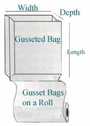
<p><img alt="Gusset Bag" src="http://www.corrosionvci.com/blog/gusset-roll1.jpg" width="90" height="126" align="right"  /></p>

<p>A - 50" + 2" =52" <br />
B - 44" + 2" =46"<br />
C - 48" + 22" = 70"</p>

<p>SIZE TO ORDER for Pallet Cover:  52" x 46" x 70"<br />
</p>]]>
        <![CDATA[<p><u><h4><a href="http://www.corrosionvci.com/corrosion/products.php?cat=21">For a Closeable Bag for use as a box or bin liner:</a></h4></u></p>

<p>Add approximately 2" to dimension  A  and add 2" to dimension B for a loose fit.  For the height (C) add the width dimension B <u>plus</u> 7-12 inches for tie-off length to the actual Height dimension C.</p>

<p><u><h5>Example of Bin or Box Size to be lined and the bag to be closed at the top.  (tied off) </h5></u><br />
Box or Bin Size: <br />
  Dimension A Length - 50" <br />
  Dimension B Width - 44" <br />
  Dimension C Height - 48" </p>

<p>Add approximately 2" to dimension  A  and add 2" to dimension B for a loose fit.  For height (C) add the width dimension B <u>plus</u> 7 inches (for a 7 inch tie off)  to the actual Height dimension C.</p>

<h5>Resulting in A Bag Size (Closeable Bag Liners)</h5>
A - 50" + 2" =52"
B - 44" + 2" =46"
C - 48" + 44" + 7" = 99"

<p>SIZE TO ORDER for a box or bin liner that can be closed at the top is:  52" x 46" x 99" </p>

<p><a href="http://www.corrosionvci.com/corrosion/products.php?cat=2">Lay Flat bags</a> can also be used for both pallet covers and as a box (bin) liner.  Simply add dimesion A plus B resulting in a bag size of 98" x 99" for the example above if a lay flat bag is desired.</p>

<p>If you are unsure of the VCI bag or regular poly bag size required to line your box, bin or pallet cover click on the following:<br />
<h5><a href="http://www.corrosionvci.com/VCI-Selection.htm">Custom Bag Size Request</a></h5>  Include a brief description of your requirements including the dimesions of  length, width and height of your box, bin or pallet to receive a free professional quotation of the proper size bag for this purpose.  Be sure to indicate if it is for a heat sealable bag, a pallet cover or a closeable box liner.  Also indicate if the bag is to made of:  <a href="http://www.foodgradebag.com/Catalog/Shop.html">regular poly plastic</a>, <a href="http://www.corrosionvci.com/corrosion/categories.php?cat=5">VCI paper</a>, <a href="http://www.corrosionvci.com/corrosion/categories.php?cat=6">VCI corrosion control plastic bag</a>, <a href="http://www.corrosionvci.com/vapor_barrier_custom_foil.htm">foil barrier material</a> or an <a href="http://www.corrosionvci.com/corrosion/categories.php?cat=24">anti-static plastic material</a>.</p>]]>
    </content>
</entry>
<entry>
    <title>Alumitex VCI Paper for Aluminum Corrosion Protection</title>
    <link rel="alternate" type="text/html" href="http://www.corrosionvci.com/blog/2006/11/alumitex_vci_paper_for_aluminu.html" />
    <link rel="service.edit" type="application/atom+xml" href="http://www.corrosionvci.com/cgi-bin/mt/mt-atom.cgi/weblog/blog_id=1/entry_id=16" title="Alumitex VCI Paper for Aluminum Corrosion Protection" />
    <id>tag:www.corrosionvci.com,2006:/blog//1.16</id>
    
    <published>2006-11-02T19:20:15Z</published>
    <updated>2006-11-02T20:31:40Z</updated>
    
    <summary>Corrosion Control for Aluminum Aircraft Parts Recently we have received several inquiries regarding the shelf life and useable term of VCI paper. VCI paper and VCI products will have a longer shelf life when they are properly stored....</summary>
    <author>
        <name>Corrosion Blogmaster</name>
        <uri>http://www.corrosionvci.com</uri>
    </author>
            <category term="VCI Paper" />
    
    <content type="html" xml:lang="en" xml:base="http://www.corrosionvci.com/blog/">
        <![CDATA[<p><font=12><b><a href="http://www.corrosionvci.com/corrosion/products.php?cat=10"><strong>Corrosion Control for Aluminum Aircraft Parts</strong></a></font></b></p>

<p>Recently we have received several inquiries regarding the shelf life and useable term of <a href="http://www.corrosionvci.com/corrosion/categories.php?cat=5"><strong>VCI paper</strong></a>.</p>

<p><a href="http://www.corrosionvci.com/corrosion/categories.php?cat=5"><strong>VCI paper</strong></a> and <a href="http://www.corrosionvci.com/corrosion/categories.php"><strong>VCI products</strong></a> will have a longer shelf life when they are properly stored.<br />
</p>]]>
        <![CDATA[<p>Specifically the question was asked as to whether VCI evaporates (sublimates) away when the VCI products are left exposed, indoors prior to their use for <a href="http://www.corrosioncontrol.ca">corrosion control </a>of parts.</p>

<p>The correct answer is yes, but at a regulated rate of dispersion.  This inherint property of VCI is necessary in order for the VCI to protect metals from corrosion.  This is why <strong><a href="http://www.corrosionvci.com/vciworks.htm">vapor corrosion inhibitors</a></strong> are very effective for corrosion protection while parts or equipment is exposed to variable conditions during shipping & storage.</p>

<p><strong>Storage of VCI Materials</strong><br />
In the case of <a href="http://www.corrosionvci.com/corrosion/products.php?cat=21">VCI materials on rolls</a>, the VCI in the inner layers of the rolls should be fine for at least 8 to 12+ months storage given average plant storage conditions in a plant in North America.  In the original box and under most ambient conditions (indoors) the shelf life is 24 months + an "in use" period.  Temperature and humidity affect the rate of the VCI depletion.</p>

<p>Generally speaking as the ambient temperatures and relative humidity is increased, the rate of release of the VCI from any VCI packaging or device increases.   The rate of release of the VCI accelerates above 65 degrees F and 65 percent humidity.</p>

<p>Storing <a href="http://www.corrosionvci.com/corrosion/categories.php?cat=5">VCI paper</a> or other <a href="http://www.corrosionvci.com/corrosion/categories.php">VCI material</a> on rolls, in the original container below 65 F is ideal.  For extended periods of storage (beyond 18 months) placing the VCI paper or other VCI product with its original container inside a vapor barrier bag greatly increases the storage life of the corrosion control VCI products. Typcial vapor barrier bag materials include:  4 mil thick or greater plastic film, co-extruded plastic film, foil laminate or metalized bags.  A double layer of a mono LDPE bag (double bagging) is good for this purpose.  For an even longer shelf life, place the entire pack in a cool storage area, such as an air conditioned room.</p>

<p><strong>Aluminum Parts Storage</strong><br />
<a href="http://www.corrosionvci.com/VCIPAPER/alumitex.pdf">Alumitex VCI Paper </a>is a great interleave for use for aluminum, however depending on the intended storage period, transit times, time continguencies and the anticipated package exposure to ambient/environment conditions an outer layer <strong><a href="http://www.corrosionvci.com/corrosion/products.php?cat=2">VCI bag </a></strong> or <strong><a href="http://www.corrosionvci.com/corrosion/products.php?cat=21">VCI container liner </a></strong>is recommended.  See this presentation for more information:  <a href="http://www.corrosionvci.com/VCIPAPER/PackagingDesign.pdf">VCI Corrosion Protection Packaging Design</a></p>]]>
    </content>
</entry>
<entry>
    <title>More about Water Boiler Treatment &amp; Powder Inhibitors</title>
    <link rel="alternate" type="text/html" href="http://www.corrosionvci.com/blog/2006/05/more_about_water_boiler_treatm.html" />
    <link rel="service.edit" type="application/atom+xml" href="http://www.corrosionvci.com/cgi-bin/mt/mt-atom.cgi/weblog/blog_id=1/entry_id=15" title="More about Water Boiler Treatment &amp; Powder Inhibitors" />
    <id>tag:www.corrosionvci.com,2006:/blog//1.15</id>
    
    <published>2006-05-23T06:21:04Z</published>
    <updated>2006-05-23T16:38:14Z</updated>
    
    <summary>Corrosion Inhibitor Additives for Water Boilers Author: Thomas Yoon explains about water boilers in his article... ....scales are very damaging to the boiler because they interfere with the heat transfer and can lead to overheating and eventually, boiler rupture...click here...</summary>
    <author>
        <name>Corrosion Blogmaster</name>
        <uri>http://www.corrosionvci.com</uri>
    </author>
            <category term="Corrosion Inhibitor Additives" />
    
    <content type="html" xml:lang="en" xml:base="http://www.corrosionvci.com/blog/">
        <![CDATA[<p><a href="http://www.corrosionvci.com/corrosion/proddetail.php?prod=VCI-1_Powder"><h4>Corrosion Inhibitor Additives for Water Boilers</h4></a><br />
Author: <u>Thomas Yoon </u>explains about water boilers in his article...<br />
....scales are very damaging to the boiler because they interfere with the heat transfer and can lead to overheating and eventually, boiler rupture...<a href="http://b-science.blogspot.com/2006/05/why-condition-your-boiler-water.html#links">click here to read the entire article at his blog</a></p>

<p>By using one of the <a href=http://www.corrosionvci.com/blog/2006/05/corrosion_inhibitor_powder_add.htm.">corrosion inhibitor powders</a> we discussed in our last post, the build up of sediment deposits and damaging corrosion of water boilers is greatly reduced.  Most users apply <a href="http://www.corrosionvci.com/corrosion/proddetail.php?prod=VCI-1_Powder&cat=14">VCI-1 powder</a> to working water boilers at a rate of 0.5 to 1.0 percent of the weight of water in the system. This amounts to 4 up to 8 pounds of <a="http://www.corrosionvci.com/corrosion/categories.php?cat=14"> powder corrosion inhibitor</a> in 100 gallons of water.</p>]]>
        <![CDATA[<p>The make-up water entering the system is also treated either by metering of a solution of corrosion inhibitor or by "topping up" the water reservoir on a regular basis.</p>

<p>To avoid bacteria or other uninvited contamination into the water system,  the pH of the boiler water is often targetted around 10.  Caustic soda or other material high in its basic pH is used for this purpose.  This also helps to reduce corrosion and scaling in the system.  By using the appropriate water additives, maintaining a basic pH, incorporating a scheduled "blow down" of the system and good maintenance procedures one can attain a long boiler life and the benefits of an efficient heat/power source.</p>

<p>When <a href="http://www.boilercorrosion.com">laying up the equipment for seasonal shutdown </a>always clean it out thoroughly and treat with <a href="http://www.corrosionvci.com/corrosion/proddetail.php?prod=VCI-1_Powder">corrosion inhibitor powders</a> to ensure a maintenance free start up next season.  This will reduce yearly maintenance and extend the life of the equipment.</p>

<p>There are a few common methods of boiler lay up involving nitrogen purge, oil based chemicals, hazardous chemicals and recently biodegradable water soluble VCI powder products.  Nitrogen purge involves special handling equipment and procedures to preserve the equipment.  Oil based products are messy and require clean up and disposal prior to putting the equipment back into service.  With the availability of the new <a href="http://www.corrosionvci.com/corrosion/proddetail.php?prod=VCI-1_Powder">VCI powder </a>products there is no good reason to work with hazardous materials.</p>

<p><a href="http://www.corrosionvci.com/corrosion/categories.php?cat=14"><h3>VCI POWDER PRODUCTS</h3></a>The easiest and cleanest method for in use operation or water boiler seasonal lay-up.  It is also used for the short or long term corrosion protection of tanks, pipe, cooling towers, chillers, silos and any enclosure made of metals.  </p>

<p><a href="http://www.corrosionvci.com/corrosion/products.php?cat=29">For water boilers, <u>VCI-1 powder </u></a>is often used because of the lower cost, biodegradabiity and its effectiveness for cast iron, steel and aluminum metals.  The VCI <a href="http://www.corrosionvci.com/corrosion/proddetail.php?prod=VCI-1_Powder">anti-corrosion powder </a>does not require removal for most applications.  It is non-hazardous and biodegradable.  When putting the boiler back into service, after a seasonal shut-down, simply fill with water and the normal additives then fire up the equipment.</p>

<p>Where <a href="http://www.corrosionvci.com/corrosion/products.php?cat=31">non-ferrous metals are present V-848 or VCI-841 </a>is used instead of the VCI-1 powder.  V-841 is especially suited for closed loop systems, such as chillers where multi-metal materials are present and the process water system in use requires a high solubility of the inhibitor.  For help with your industrial process water treatment or storage of equipment use this <a href="http://www.corrosionvci.com/VCI-Selection.htm">corrosion control help form</a>.</p>

<p><a href="http://www.corrosioncontrol.ca/BOILER%20WATER%20TREATMENT%20AND%20LAY%20UP_files/frame.htm">Boiler Seasonal Shutdown Maintenance</a>    <a href="http://www.corrosionvci.com/corrosion/categories.php?cat=14">VCI Powder Corrosion Inhibitors</a>   <a href="http://www.corrosionvci.com/corrosion/proddetail.php?prod=VCI-1_Powder">VCI-1 Boiler Water Treatment</a></p>]]>
    </content>
</entry>
<entry>
    <title>Anti-Tarnish Packaging for Silver</title>
    <link rel="alternate" type="text/html" href="http://www.corrosionvci.com/blog/2006/05/antitarnish_packaging_for_silv.html" />
    <link rel="service.edit" type="application/atom+xml" href="http://www.corrosionvci.com/cgi-bin/mt/mt-atom.cgi/weblog/blog_id=1/entry_id=14" title="Anti-Tarnish Packaging for Silver" />
    <id>tag:www.corrosionvci.com,2006:/blog//1.14</id>
    
    <published>2006-05-12T16:52:48Z</published>
    <updated>2006-05-13T17:51:45Z</updated>
    
    <summary>Tarnish Protection Packaging for Silver Noble metals and non-ferrous metals require a different system or formula to prevent tarnish because of the unique characteristics of these types of metals. Typcially a VCI (vapor corrosion inhibitor packaging) paper or VCI poly...</summary>
    <author>
        <name>Corrosion Blogmaster</name>
        <uri>http://www.corrosionvci.com</uri>
    </author>
            <category term="VCI Packaging" />
    
    <content type="html" xml:lang="en" xml:base="http://www.corrosionvci.com/blog/">
        <![CDATA[<h3>Tarnish Protection Packaging for Silver</h3>
Noble metals and non-ferrous metals require a different system or formula to prevent tarnish because of the unique characteristics of these types of metals.  Typcially a VCI (vapor corrosion inhibitor packaging) paper or VCI poly packaging is designed to protect a range of metal types.  Two broad classifications of types are for FERROUS METALS or for MULTI-Metals.  Although Multi-metal VCI packaging products are somewhat effective for corrosion protection of silver, they are ideally suited where a combination of metal types are present.  The two types of packaging above <u>do not</u> specifcially target corrosion protection (tarnish prevention) for silver metals.

<p><b>Anti-tarnish for silver metals</b> is best achieved with a packaging system that is designed specifically for silver and noble metals.  This is available in the form of <a href="http://www.corrosionvci.com/corrosion/products.php?cat=13" title="Silver Guard" rel="tag">Silver Guard Zipper bags</a> or <a href="http://www.corrosionvci.com/corrosion/products.php?cat=8" title="silver saver" rel="tag">Silver Saver paper</a>. </p>]]>
        <![CDATA[<p>These two silver packaging products are made by Daubert Cromwell, the leading name in industrial corrosion protection.  The people who originally invented silver saver <a href="http://www.corrosionvci.com/pdf/Anti-Tarnish-Silver-Guard.pdf" rel="tag">tarnish protection for silver</a> metals.</p>

<p>Technically these two products <a href="http://www.corrosionvci.com/pdf/SilverSaver.pdf">Silver Saver Paper</a> and <a href="http://www.corrosionvci.com/pdf/SilverSaver.pdf">Silver Guard Zipper Top bags</a> are not VCI.  (Vapor Corrosion Inhibitor) packaging.  The silver protecting paper and plastic packaging prevent tarnish (corrosion, oxidation) from forming on silver metals by creating a barrier to the outside contaminants that accelerate corrosion and by creating a closed environment around the metals that is not condusive to the formation of tarnish.  They do this by absorbing the contaminants BEFORE they can interact with the surface of the silver.  The result of using this type of packaging is the preservation of noble metals in a tarnish free condition.</p>

<p>You can read more about Silver Saver paper and Silver Guard Zipper bags at the following links:<br />
<a href="http://www.corrosionvci.com/pdf/Anti-Tarnish-Silver-Guard.pdf">Silver Guard Data</a>   <a href="http://www.corrosionvci.com/silver-guard-slides_files/frame.htm">Silver Guard Slide Show</a>   <a href="http://www.corrosionvci.com/corrosion/products.php?cat=13">Silver Guard Online Store</a>   <a href="http://www.corrosionvci.com/pdf/SilverSaver.pdf">Silver Saver Paper</a>   <a href="http://www.corrosionvci.com/corrosion/products.php?cat=8">Silver Saver Online Store</a></p>]]>
    </content>
</entry>
<entry>
    <title>Environmentally Friendly Rust Removal</title>
    <link rel="alternate" type="text/html" href="http://www.corrosionvci.com/blog/2006/05/environmentally_friendly_rust.html" />
    <link rel="service.edit" type="application/atom+xml" href="http://www.corrosionvci.com/cgi-bin/mt/mt-atom.cgi/weblog/blog_id=1/entry_id=13" title="Environmentally Friendly Rust Removal" />
    <id>tag:www.corrosionvci.com,2006:/blog//1.13</id>
    
    <published>2006-05-10T06:27:03Z</published>
    <updated>2006-05-10T06:35:12Z</updated>
    
    <summary>Environmentally Friendly Rust Remover</summary>
    <author>
        <name>Corrosion Blogmaster</name>
        <uri>http://www.corrosionvci.com</uri>
    </author>
            <category term="Removing Rust Corrosion" />
    
    <content type="html" xml:lang="en" xml:base="http://www.corrosionvci.com/blog/">
        <![CDATA[<p>Here is a good article posted by krs1 at <a href="http://www.practicalenvironmentalist.com/2006/05/environmentally_friendly_rust_1.html"><strong>The Practical Environmentalist </strong></a>about Daubert Rust Remover<br />
I was just doing some research on how to remove rust from home gardening equipment without using caustic chemicals, and found this interesting press release about Evapo-Rust(TM), an environmentally friendly rust removing product that is an alternative to Naval Jelly, the most common way people remove rust from metal tools, car parts, etc. Here's some info from the press release:  <a href="http://www.practicalenvironmentalist.com/2006/05/environmentally_friendly_rust_1.html"><strong><u>continue reading rust remover...</u></strong></a></p>]]>
        
    </content>
</entry>
<entry>
    <title>Corrosion Inhibitor Powder Additives</title>
    <link rel="alternate" type="text/html" href="http://www.corrosionvci.com/blog/2006/05/corrosion_inhibitor_powder_add.html" />
    <link rel="service.edit" type="application/atom+xml" href="http://www.corrosionvci.com/cgi-bin/mt/mt-atom.cgi/weblog/blog_id=1/entry_id=12" title="Corrosion Inhibitor Powder Additives" />
    <id>tag:www.corrosionvci.com,2006:/blog//1.12</id>
    
    <published>2006-05-09T06:12:51Z</published>
    <updated>2006-05-09T06:44:43Z</updated>
    
    <summary>Corrosion inhibitor powder additives for process water systems.</summary>
    <author>
        <name>Corrosion Blogmaster</name>
        <uri>http://www.corrosionvci.com</uri>
    </author>
            <category term="Corrosion Inhibitor Additives" />
    
    <content type="html" xml:lang="en" xml:base="http://www.corrosionvci.com/blog/">
        <![CDATA[<h3><a href="http://www.corrosionvci.com/corrosion/categories.php?cat=14">VCI Corrosion Inhibitor Powder Additives For Water Systems</a></h3>

<p>When choosing a water additive for corrosion control it is important to know the metals that the water with inhibitor will come into contact.  Second is the type of system.  Is it open, closed or a recirculating water system such as a cooling system (chiller), heating system, hydro static testing, (pressure test stands), boiler or other type of industrial process water?  Is there make-up water coming into the system on a continual or on a batch top up basis?  What is the throughput of the system?  What is the use of the treated system or finished parts that are being treated for corrosion protection?  Is this a lay-up for long term corrosion protection or a short term corrosion control less than 1 year?  </p>]]>
        <![CDATA[<p>To simply we compare four different <a href="http://www.corrosionvci.com/corrosion/products.php?cat=14">corrosion inhibitor powder products</a>:</p>

<p><a href="http://www.corrosionvci.com/corrosion/proddetail.php?prod=VCI-1_Powder&cat=14 "><u><strong>FERROUS AND ALUMINUM ONLY  VCI-1 Powder</strong></u></a><br />
Safe for cast iron, aluminum, steel, stainless steel, carbon steel.  Excellent dissolved in water or applied by dry fogging.</p>

<p><a href="http://www.corrosionvci.com/corrosion/proddetail.php?prod=NoxRust-1010_VCI&cat=14"><strong><strong>For Protecting Ferrous Metals & Aluminum Nox Rust 1010</strong></strong></a><br />
This one protects the same metals as VCI-1 powder above from corrosion even in the presence of non-ferrous metals.  Dissolves in water or applied by dry fog application.</p>

<p><a href="http://www.corrosionvci.com/corrosion/proddetail.php?prod=VCI-841-Powder"><u><strong>Multi Metal Corrosion Protection for Circulating & Standing Water Systems V-841</strong></u></a><br />
This multiple metal corrosion inhibitor is especially good for circulating water systems such as coolers, chillers, machine cooling systems and closed loop systems.  Protects all types of metals and is extra safe on rubber seals, teflon and other synthetic substances.  Can be used for hydrotesting and wet lay-up applications.  Contains more contact corrosion inhibitor than V-848.</p>

<p><a href="http://www.corrosionvci.com/corrosion/proddetail.php?prod=VCI-848P"><u><strong>Multi-Metal Corrosion Inhibitor for Dry Applications V-848</strong></u></a> VCI-848 Multi-Metal Corrosion Inhibitor Powder, meets Military Specification Mil-I-22110. VCI powder is an excellent protection for combinations of metal types including yellow metals such as copper and brass.  This one is similar to the V-841 above as it is also a water soluble corrosion inhibitor.  This one however is more effective for for dry applications where a vapor corrosion inhibitor is needed.</p>

<p>This article is to be continued....</p>]]>
    </content>
</entry>
<entry>
    <title>VCI Paper Grades &amp; Types</title>
    <link rel="alternate" type="text/html" href="http://www.corrosionvci.com/blog/2006/04/vci_paper_grades_types_1.html" />
    <link rel="service.edit" type="application/atom+xml" href="http://www.corrosionvci.com/cgi-bin/mt/mt-atom.cgi/weblog/blog_id=1/entry_id=11" title="VCI Paper Grades &amp; Types" />
    <id>tag:www.corrosionvci.com,2006:/blog//1.11</id>
    
    <published>2006-04-28T02:39:10Z</published>
    <updated>2006-05-06T01:55:23Z</updated>
    
    <summary>VPI VCI VCPI VPN MPI VpCI Paper Continued..... As we discussed in our previous article on the branding of VCI paper manufacturers typcially come up with their own branding to describe their brand of corrosion control paper. This article further...</summary>
    <author>
        <name>Corrosion Blogmaster</name>
        <uri>http://www.corrosionvci.com</uri>
    </author>
            <category term="VCI Paper" />
    
    <content type="html" xml:lang="en" xml:base="http://www.corrosionvci.com/blog/">
        <![CDATA[<h3><a href="http://www.corrosionvci.com/blog/2006/04/selecting_vci_paper.html">VPI VCI VCPI VPN MPI VpCI Paper Continued.....</a></h3>

<p>As we discussed in our <a href="http://www.corrosionvci.com/blog/2006/04/selecting_vci_paper.html">previous article</a> on the branding of <b><a href="http://www.corrosionvci.com/corrosion/categories.php?cat=5">VCI paper</a></b> manufacturers typcially come up with their own branding to describe their brand of <a href="http://www.corrosionvci.com/corrosion/categories.php?cat=5" title="corrosion control paper" title="corrosion control packaging" rel="tag">corrosion control paper.</a>  This article further explores the key elements for success using VCI Paper for corrosion protection in packaging.</p>

<p><a href="http://www.corrosionvci.com/corrosion/categories.php?cat=5"><h3>VCI PAPER GRADES</h3></a></p>]]>
        <![CDATA[<p>The VCI paper grade that works best for <a href="http://www.corrosionvci.com/corrosion/categories.php" title="corrosion protective packaging" rel="tag">corrosion protective packaging </a>of machinery, parts and equipment is determined by the <u>type of metal</u> that requires corrosion or <a href="http://www.corrosionvci.com/corrosioncontrol.htm">rust protection</a>, the <u>anticipated environment</u> and the <u>length of time the metal is to be preserved</u>.  This is why it is important to have some understanding of <a href="http://www.corrosionvci.com/corrosion/categories.php?cat=5" rel="tag">VCI paper grades</a>.  When referring to a VCI paper grade the component features are intended use and construction.</p>

<p><strong>Intended Use of VCI Paper</strong><br />
In addition to preventing corrosion in metals you need to know the following to determine the grade or type of VCI paper to use for your application:<br />
1. Type of metal(s) you are shipping?<br />
2. How long in months or years do you need to preserve the metal?   Shipping & storage time.<br />
3. What environment will the package be subjected to... during this time?  <a href="http://www.corrosionvci.com/exportpackaging/VCI-packaging_files/frame.htm">Export </a>or domestic?  Coastal area?<br />
4. Are there any oils, residues, machine coolant or soils on the metal surface?</p>

<p>From the answers to the above questions an experienced  professional can help you to determine the best protection system for your corrosion control plan.  Note that the longer the period of protection, the greater the cost.  For periods extending past 2 years, a combination of <a href="http://www.corrosionvci.com/VCIPAPER/PackagingDesign.pdf">VCI paper and additional materials </a>is usually recommended.</p>

<p>There are several types of VCI paper, for example:<br />
VCI paper for a specific type of metal.<br />
  <a href="http://www.corrosionvci.com/corrosion/products.php?id=1">Ferrous-cast iron & steel</a>, <a href="http://www.corrosionvci.com/corrosion/categories.php?cat=3">non-ferrous</a>, <a href="http://www.corrosionvci.com/corrosion/products.php?cat=10">aluminum</a>, <a href="http://www.corrosionvci.com/corrosion/products.php?cat=9">copper</a>, <a href="http://www.corrosionvci.com/corrosion/products.php?cat=8">silver</a>, galvanized...<br />
<a href="http://www.corrosionvci.com/corrosion/products.php?cat=7">VCI paper for combinations of metal types</a><br />
VCI paper of the type(s) above with additional <a href="http://www.corrosionvci.com/corrosion/proddetail.php?prod=pc55a">poly</a>, wax, <a href="http://www.corrosionvci.com/vci-barrier-paper.htm">other vapor barrier backing</a> or a <a href="http://www.corrosionvci.com/corrosion/categories.php?cat=78">laminate construction</a><br />
VCI paper as in any of the three descriptions above PLUS a reinforced construction for additional tear strength</p>

<p><strong>Construction</strong><br />
The last two types in the list above enter into the realm of construction of VCI packaging materials.  VCI paper can be constructed in different thicknesses and with additional materials 'bonded' to the paper for increased long term corrosion (rust) protection.  Different constructions are also made for<a href="http://www.corrosionvci.com/corrosion/categories.php?cat=78"> rust protection in aggressive or extreme conditions</a>.  Both the paper and the additional vapor barrier can be of different thickness depending upon the needs of the particular application.  Paper thickness is measured in pounds/ream or kilograms/square meter.  The thicker the paper the more physical damage protection in provides to the wrapped parts.  The thicker the addtional bonded layer or laminate then the more vapor barrier protection is provided by the paper grade.</p>

<p><u>VCI Paper Thickness</u><br />
Typcially paper thickness is referred to as basis weight, in pounds per ream.  The English & Metric System uses a scale of grams per square meter.  In the United States, the weight in pounds of one ream of paper that is cut to the basic size (or trade size) for a specific  paper type.  For <u>industrial VCI paper a ream is 3,000 square feet </u>of paper.  Most industrial VCI paper sold today will be 30 pounds/ream or more.  It is written 30#, 44#, 60# etc. to describe the paper thickness.  It may be noted as 35#, 35/57*, 35 lb, and so on.  Popular thicknesses of VCI paper used in industry are 30#, 35#, 40#, 50#, 60# and 70# VCI Paper.  Most being in the 30# to 40# range as the protection period is relatively short-less than one year.</p>

<p>*  57gsm = 57 grams per square meter = 35 lbs per reem    (The conversion factors are shown below:)<br />
                               Trade Size           Basis Weight to Grammage         Grammage to Basis Weight<br />
                               3000 sq. ft.                1.6275 x lb. = gsm                        0.61445 x gsm = lb. </p>

<p><strong>The important thing to know about VCI paper thickness, is that the higher the basis weight, the greater the thickness of the VCI paper.</strong></p>

<p>When selecting <a href="http://www.corrosionvci.com/corrosion/categories.php">corrosion protective packaging</a>, providing your supplier with the basic information described in list points 1 to 4 above, regarding the shipment or storage, are key components of the VCI packaging selection process.  For help with your packaging design you can also fill out this form:  <a href="http://www.corrosionvci.com/VCI-Selection.htm">VCI Packaging Selection Form</a>  Additionally many packaging projects use <a href="http://www.corrosionvci.com/corrosion/products.php?cat=40">VCI paper chips for additional corrosion protection inside the packaging</a>.</p>

<p>Resources Used for this Article:  <a href="http://www.corrosioncontrol.ca/pdf/mil-spec-paper.pdf">Mil-P-3420 VCI Paper  </a><a href="http://www.corrosionvci.com/VCIPAPER/VCIpaperCatalog.pdf">VCI Paper Catalog</a>  <a href="http://www.corrosionvci.com/VCIPAPER/PackagingDesign.pdf">Packaging Design for Corrosion Control </a><a href="http://www.corrosionvci.com/exportpackaging/VCI-packaging_files/frame.htm">Export Packaging Systems</a> <a href="http://www.corrosionvci.com/corrosion/categories.php?cat=5">VCI Paper Store </a> <a href="http://www.corrosionvci.com/corrosion/products.php?cat=40">VCI Paper Chips </a></p>]]>
    </content>
</entry>
<entry>
    <title>Mil-C-16173 &amp; Mil-PRF-16173 Grades</title>
    <link rel="alternate" type="text/html" href="http://www.corrosionvci.com/blog/2006/04/milc16173_milp16173_grades_1.html" />
    <link rel="service.edit" type="application/atom+xml" href="http://www.corrosionvci.com/cgi-bin/mt/mt-atom.cgi/weblog/blog_id=1/entry_id=10" title="Mil-C-16173 &amp; Mil-PRF-16173 Grades" />
    <id>tag:www.corrosionvci.com,2006:/blog//1.10</id>
    
    <published>2006-04-22T06:53:05Z</published>
    <updated>2006-05-06T04:30:03Z</updated>
    
    <summary>&gt;Mil Prf-16173 Corrosion Inhibitor Grades Continued This is a continuation, of our discussion last month, about the Mil-C-16173 and Mil-PRF-16173 military specifications. There are four different grades and two different classes that are often used in the military specification for...</summary>
    <author>
        <name>Corrosion Blogmaster</name>
        <uri>http://www.corrosionvci.com</uri>
    </author>
            <category term="Military Specifications" />
    
    <content type="html" xml:lang="en" xml:base="http://www.corrosionvci.com/blog/">
        <![CDATA[<p><a href="http://www.corrosionvci.com/corrosion/products.php?cat=63">><h4>Mil Prf-16173 Corrosion Inhibitor Grades</h4></a> Continued</p>

<p>This is a <a href="http://www.corrosionvci.com/blog/2006/03/mil_c16173_and_milp16173e.html">continuation, of our discussion last month</a>, about the <a href="http://www.corrosionvci.com/corrosion/products.php?cat=63" title="Mil-C-16173" rel="tag">Mil-C-16173 </a> and <a href="http://www.corrosionvci.com/corrosion/products.php?cat=66" title="Mil-C-16173 rel="tag">Mil-PRF-16173</a> <a href="http://www.corrosionvci.com/blog/military_specifications/">military specifications</a>.  There are four different grades and two different classes that are often used in the military specification for <a href="http://www.corrosionvci.com/corrosion/products.php?cat=19" title="corrosion inhibitor coatings" rel="tag">     corrison inhibitor coatings</a> above. <br />
</p>]]>
        <![CDATA[<p><u><strong>Class</strong></u> refers to the percentage of VOC in the coating.  Class 1 coatings contain a higher percentage of solvents that will evaporate off the coated surface in order for the coating to dry.  Class 2 coatings contain LESS VOC'S and are often stipulated for jobs in or destined to California.  If the class is not stipulated in the job specification requirements than you are free to use a CLASS 1 product.</p>

<p><u><strong>GRADES</strong></u> Often the job will requirest a particular Grade either 1, 2, 3, or 4.</p>

<p><a href="http://www.corrosionvci.com/corrosion/proddetail.php?prod=Mil-prf-16173eGr1&cat=66">Grade 1</a> is a black hard drying film for external finished machine parts. <br />
<a href="http://www.corrosionvci.com/corrosion/proddetail.php?prod=mil-prf-16173e&cat=66">Grade 2</a> is a SOFT, greasy film that provides undercover protection for metal surfaces on machines, instruments, & bearings. <br />
<a href="http://www.corrosionvci.com/corrosion/proddetail.php?prod=nr4101&cat=63">Grade 3</a> is an oily film.  Water displacing coating used on metal parts. <br />
<a href="http://www.corrosionvci.com/corrosion/proddetail.php?prod=mil-prf-16173eGr4cl1">Grade 4</a> provides a non-tack, clear surface for general purpose indoor/outdoor protection where handling, stacking or counting is required.  Our Vappro-9868  conforms to all of the above grades for <a href="http://www.corrosionvci.com/corrosion/proddetail.php?prod=V9868">Mil-C-16173 Rev. D Class 1</a><br />
All grades are removable although the method of removal is different for each grade.</p>

<p>For Mil-C-16173, if there is no mention of the Revision or of the Class number then a revision D product with class 1 is suitable for the job.  <u>Example</u>:  <a href="http://www.corrosionvci.com/corrosion/proddetail.php?prod=V9868">Mil C-16173D</a></p>

<p>Mil Spec products can be purchased online here:  <a href="http://www.corrosionvci.com/corrosion/categories.php?cat=26">Military Specifications</a>  I you have further questions I can be reached by <a href="mailto:kpr@corrosionvci.com">email</a>.</p>]]>
    </content>
</entry>
<entry>
    <title>Corrosion Control</title>
    <link rel="alternate" type="text/html" href="http://www.corrosionvci.com/blog/2006/04/corrosion_control.html" />
    <link rel="service.edit" type="application/atom+xml" href="http://www.corrosionvci.com/cgi-bin/mt/mt-atom.cgi/weblog/blog_id=1/entry_id=6" title="Corrosion Control" />
    <id>tag:www.corrosionvci.com,2006:/blog//1.6</id>
    
    <published>2006-04-14T13:07:31Z</published>
    <updated>2006-04-30T06:07:59Z</updated>
    
    <summary>What is corrosion control? Simply put, corrosion control is the field of study that is concerned with the prevention, retarding, slowing down, the normal natural process of the oxidation of metals. When applied to ferrous metals this process is typically...</summary>
    <author>
        <name>Corrosion Blogmaster</name>
        <uri>http://www.corrosionvci.com</uri>
    </author>
            <category term="Corrosion Control" />
    
    <content type="html" xml:lang="en" xml:base="http://www.corrosionvci.com/blog/">
        <![CDATA[<h4><a href="http://www.corrosioncontrol.ca" title="corrosion control" rel="tag"><u>What is corrosion control?</u></a></h4>

<p>Simply put, <a href="http://www.corrosionvci.com/blog/2006/04/corrosion_control.html" rel="subject tag">corrosion control</a> is the field of study that is concerned with the prevention, retarding, slowing down, the normal natural process of the oxidation of metals.  When applied to ferrous metals this process is typically called <a href="http://www.corrosionvci.com/corrosion/products.php?cat=1" rel="tag">rust control</a>.  For all other metals including ferrous metals the process is called <a href="http://www.corrosionvci.com/corrosion/index.php" title="corrosion" rel="tag">corrosion</a>.</p>

<p>There are a number of great web sites providing information about <a href="http://www.corrosionvci.com" title="corrosion" rel="tag">corrosion</a> and <a href="http://www.corrosioncontrol.ca" title="corrosion control" rel="tag">corrosion control</a>:</p>

<p><a href="http://www.daubertcromwell.com">Daubert Cromwell</a>  <a href="http://www.corrosioncontrol.ca">Corrosion Control Canada</a>  <a href="http://www.corrosionvci.com">Corrosion VCI</a>  <a href="http://www.nace.org">NACE</a></p>]]>
        
    </content>
</entry>
<entry>
    <title>Selecting VCI Paper</title>
    <link rel="alternate" type="text/html" href="http://www.corrosionvci.com/blog/2006/04/selecting_vci_paper.html" />
    <link rel="service.edit" type="application/atom+xml" href="http://www.corrosionvci.com/cgi-bin/mt/mt-atom.cgi/weblog/blog_id=1/entry_id=8" title="Selecting VCI Paper" />
    <id>tag:www.corrosionvci.com,2006:/blog//1.8</id>
    
    <published>2006-04-13T03:32:17Z</published>
    <updated>2006-05-06T04:09:22Z</updated>
    
    <summary>There are many different types and brands of VCI paper in the marketplace. Many manufacturers use their own branding referring to it as VCI, VPI, VPN, VpCI, VPP, MPI, PW or other acronym to describe their particular brand of the...</summary>
    <author>
        <name>Corrosion Blogmaster</name>
        <uri>http://www.corrosionvci.com</uri>
    </author>
            <category term="VCI Paper" />
    
    <content type="html" xml:lang="en" xml:base="http://www.corrosionvci.com/blog/">
        <![CDATA[<h3>There are many different types and brands of <a href="http://www.corrosionvci.com/corrosion/categories.php?cat=5" title="VCI Paper" rel="tag">VCI paper</a> in the marketplace.  </h3>

<p>Many manufacturers use their own branding referring to it as <a href="http://www.corrosionvci.com/vciworks.htm" rel="tag">VCI,  VPI, VPN, VpCI, VPP, MPI, PW </a>or other acronym to describe their particular brand of the <a href="http://www.corrosionvci.com/vci148_paper.htm" title="VCI Paper" rel="tag">VCI paper</a>.  Manufacturers or marketeers will do this in an attempt to "differentiate their product" from those of competitors.  In addition to they will  often add their own product code numbers or trade names. </p>

<p>As in these two examples:     <a href="http://www.corrosionvci.com/corrosion/categories.php?cat=5" title="VCI Paper" rel="tag">VPI Paper</a>  Product Code:  VCI-146     <strong> OR  </strong>     <a href="http://www.corrosionvci.com/corrosion/categories.php?cat=5"> VCI Paper </a>Product Code:  <a href="http://www.corrosionvci.com/corrosion/proddetail.php?prod=PW32"> PW-32</a></p>

<p>Basically all of these <u>catchy buzz words and marketing "spin</u>"  mean, or try to convey, the same particular attribute of the <a href="http://www.vci-paper.com/" rel="tag">corrosion inhibitor (inhibiter) paper</a>.  The meaning of the terms are basically the same.  This is paper used to wrap or as <a href="http://www.corrosionvci.com/VCIPAPER/PackagingDesign.pdf" title="VCI Paper Corrosion Protection" rel="tag">interleave corrosion protection</a> for metal parts or metal materials to slow down or prevent the natural process of rust and corrosion.  The paper is impregnated or coated with a <a href="http://www.corrosionvci.com/corrosion/index.php" title="corrosion inhibitor" rel="tag">corrosion inhibitor</a>.  <br />
This branding or descriptive term has changed several times during the past 50 years probably as the industry tries to re-invent itself or find a unique term to describe the benefits of their products.  The current generally accepted terminology used by knowledgeable and experienced companies in North America today is <a href="http://www.corrosionvci.com/vciworks.htm" title="VCI" rel="tag">VCI</a>.  There are of course a few exceptions where a manufacturer will use their own trade name and then define the product properties.</p>

<p>See below:</p>

<p><strong>VCI  </strong> <u>Translation:</u>  Vapor Corrosion Inhibitor or Volatile Corrosion Inhibitor<br />
<strong>VPI  </strong><u>Translation:</u>  Vapor Phase Inhibitor or Vapor Paper Inhibitor</p>]]>
        <![CDATA[<p><strong>VPN  </strong><u>Translation:</u>  Vapor Phase iNhibitor or Vapor Paper Inhibitor<br />
<strong>VpCI </strong><u>Translation:</u>  Vapor Phase Corrosion Inibitor or Vapor Corrosion Inhibitor<br />
<strong>VPP  </strong><u>Translation:</u>  Vapor Phase Paper <br />
<strong>MPI  </strong><u>Translation:</u>  Mulit-metal Paper Inhibitor or Multi-metal Phase Inhibitor</p>

<p>The list above is a sample of a few of the labels you will find on <a href="http://www.corrosionvci.com/VCIPAPER/VCIpaperCatalog.pdf" rel="tag">corrosion control paper</a> packaging that is currently offered in the marketplace.</p>

<p>Manufactures will often print their company logo(s), company name and possibly the VCI paper grade or product code on the paper;  And of course, one of the terms in the above list to identify the paper as <a href="http://www.corrosionvci.com/corrosion/categories.php?cat=5" title="VCI Paper" rel="tag">VCI paper</a>.</p>

<p><br />
So now you say....ok, that clarifies the naming convention of VCI, VPI, VPN, VpCI, VPP, MPI ... etc. products and what this means....Well yes...and not quite...</p>

<p>To futher explain there is the whole issue of the <u>grade</u> and <u>intended use</u> of the VCI PAPER.  We will discuss these two issues in our next post.  If you are currently seeking to find <a href="http://www.corrosionvci.com/corrosion/categories.php?cat=5" title="VCI Paper" rel="tag">VCI Paper</a> go here:  http://www.corrosionvci.com/corrosion/categories.php?cat=5<br />
<a href="http://technorati.com/tag/corrosion+control" rel="tag">corrosion control</a></p>]]>
    </content>
</entry>
<entry>
    <title>Finding Corrosion Control Products</title>
    <link rel="alternate" type="text/html" href="http://www.corrosionvci.com/blog/2006/04/finding_corrosion_control_prod.html" />
    <link rel="service.edit" type="application/atom+xml" href="http://www.corrosionvci.com/cgi-bin/mt/mt-atom.cgi/weblog/blog_id=1/entry_id=7" title="Finding Corrosion Control Products" />
    <id>tag:www.corrosionvci.com,2006:/blog//1.7</id>
    
    <published>2006-04-10T19:47:05Z</published>
    <updated>2006-04-10T19:50:25Z</updated>
    
    <summary>There is a growing discontent among internet users when trying to find a corrosion control product using a search engine.  24% of searchers agreed that this problem is caused by advertisers paying to be in the top of the search engine results page.
If you are looking for corrosion control products go here:  www.corrosionvci.com/corrosion/search.php</summary>
    <author>
        <name>Corrosion Blogmaster</name>
        <uri>http://www.corrosionvci.com</uri>
    </author>
            <category term="Related Items" />
    
    <content type="html" xml:lang="en" xml:base="http://www.corrosionvci.com/blog/">
        <![CDATA[<p><H4><a href="http://www.corrosionvci.com/corrosion/sitemap.php" title="corrosion protection products" rel="tag">Corrosion Control Products & Search Engines</a></h4></p>

<p>A recent survey conducted by UK-based online marketing firm, Harvest Digital shows that <a href="http://www.google.com">Google</a> is almost universally recognized as the UK's leading search engine.  It is generally accepted that the results are similar in North America. </p>

<p><br />
A large group of <u>search engine users </u>express less than stellar expectations from their experience with search engines. There is a growing dissatisfaction with search results.</p>

<p><br />
</p>]]>
        <![CDATA[<p>There appears to be <u>a growing dissatisfaction </u>among UK search engine <u>users</u> with only 22% of the survey group stating they felt "... confident that search engines would always give them the information that they needed." Many users blame themselves when searches produced less than useful results. 36% assumed they were using the wrong keywords. 32% figured the information they were looking for was too specialized. </p>

<p>MOST NOTABLE IS THAT, nearly a quarter of respondents said that <u>advertisers paying for high position</u> on the results page are responsible for the difficulty in finding the relevant result from a search engine.</p>

<h5> 24% agreed with the statement, "Advertisers are paying to come top of the results", is the reason "... some searches are less successful"

<p>If you are looking for <a href="http://www.corrosionvci.com/corrosion/sitemap.php" title="corrosion control products" rel="tag">corrosion control products </a>just go here:  <a href="http://www.corrosionvci.com/corrosion/index.php" title="corrosion control products" rel="tag">Corrosion Control Products</a></h5></p>]]>
    </content>
</entry>
<entry>
    <title>VCI Paper Sheets</title>
    <link rel="alternate" type="text/html" href="http://www.corrosionvci.com/blog/2006/04/vci_paper_sheets.html" />
    <link rel="service.edit" type="application/atom+xml" href="http://www.corrosionvci.com/cgi-bin/mt/mt-atom.cgi/weblog/blog_id=1/entry_id=5" title="VCI Paper Sheets" />
    <id>tag:www.corrosionvci.com,2006:/blog//1.5</id>
    
    <published>2006-04-03T07:54:32Z</published>
    <updated>2006-04-03T08:04:33Z</updated>
    
    <summary>12 inch x 12 inch VCI Paper Sheets 30# Kraft with Multi-metal VCI 1000 sheets/bundle A multi-metal vci paper suitable for all types of metals. </summary>
    <author>
        <name>Corrosion Blogmaster</name>
        <uri>http://www.corrosionvci.com</uri>
    </author>
            <category term="VCI Paper" />
    
    <content type="html" xml:lang="en" xml:base="http://www.corrosionvci.com/blog/">
        <![CDATA[<h3><a href="http://www.corrosionvci.com/corrosion/proddetail.php?prod=uw30a12x12" title="VCI Paper" rel="tag"> VCI Paper 12" x 12"</a></h3>

<p><img src="http://www.corrosionvci.com/corrosion/prodimages/vci-paper-sheets.jpg" border="0" alt="VCI Paper 12&nbsp; x 12&nbsp;" /> </p>

<p>12 inch x 12 inch VCI Paper Sheets 30# Kraft with Multi-metal VCI 1000 sheets/bundle A multi-metal vci paper suitable for all types of metals. <br />
<h4><br />
<a href="http://www.corrosionvci.com/vciworks.htm">How VCI Works</a>                 <a href="http://www.corrosionvci.com/exportpackaging/VCI-packaging.htm">Packaging Slide Show</a>             <a href="http://www.corrosionvci.com/VCIPAPER/PackagingDesign.pdf">Packaging Design Considerations</a>              </h4></p>]]>
        
    </content>
</entry>

</feed>